
Recession Watch: Why the Next Downturn Will Be Different
Nearly all economists and contractors expect some degree of economic slowdown this year, with some even incorporating a recession into their forecasts. However, industry executives and economists note that, compared with the Great Recession of 2007-2009, this downturn differs significantly in terms of the job market, project pipelines, interest rate environment, and supply chain conditions, and its duration and depth may be relatively moderate.
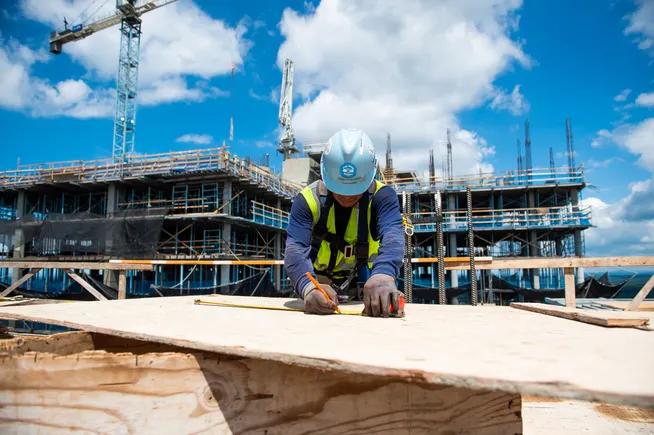
Almost all economists and contractors expect some degree of economic slowdown this year. Some institutions have even factored a recession into their current forecasts. But the question lingering in many observers' minds remains:How will this downturn be different。
"Like most contractors, our early signs indicate that some slowdown is coming, as projects are being pushed to later time windows," said George Pfeffer, a member of the management committee at DPR, a commercial general contractor headquartered in Redwood City, California. "We've been through several of these cycles, and I can say that each time there is always something different."
Pfeffer specifically pointed to labor shortages and volatility in commodity markets as two key factors. He said,The trend of material costsplays a critical role in procurement strategies.
Taking electrical equipment as an example, electrical manufacturers and distributors have told DPR that the current backlog of orders for switchgear—a component essential for power supply and distribution in projects—is as high as $1.5 billion. Pfeffer said that due to high demand, DPR expects shortages in metal receptacles and busway.

"In terms of new project opportunities, we expect the market to be more challenging," Pfeffer said. "There are many variables at play, and we expect things to become clearer in 2023, which may mean fewer clients willing to move forward with projects until there is more certainty."
Learning from history
Examining data from past recessions can help put the current environment into clearer context.
According to data from the Associated General Contractors of America (AGC), in the months before the Great Recession, nonresidential construction employment grew at an average rate of 3.3%. In the current cycle, that figure was about 6.3% over the last seven months of 2022.
"Nonresidential construction growth in the second half of 2022 was stronger than in the second half of 2007," said Ken Simonson, chief economist at AGC. "At that time, both single-family and multifamily residential construction were shrinking, which could have dragged down demand for related retail, street, school, and public safety buildings, and demand for other types of nonresidential construction was also slowing."

According to data from the U.S. Bureau of Labor Statistics, the current national unemployment rate is also much healthier than before the Great Recession. In the summer of 2007, the unemployment rate hovered around 4.6%, while last month it was only about 3.5%.
Additionally, according to data from theAssociated Builders and Contractors (ABC)construction backlog in November also reached its highest level since the second quarter of 2019, indicating that new projects are still coming online.
"It's hard to imagine a significant spike in unemployment like we saw during the Great Recession," said Jeff Hansen, CEO of Adolfson & Peterson Construction, a general contractor headquartered in Minneapolis. "We currently face labor shortages, and jobs are still being created. I don't foresee a major correction."

Given these differences, John Fish, CEO of Suffolk, a construction contracting company headquartered in Boston, believes that the 2023 recession will carry its own unique hallmark, distinct from past economic downturns.
"Despite rising interest rates and high inflation, the fundamentals of our economy remain strong," Fish said. "We see upward trends in GDP, consumer confidence remains high, Americans still have spending power, employment reports are strong, and the unemployment rate is low."
The impact of interest rates
Fish also noted that interest rate hikes remain a major concern for the construction industry. The Federal Reserve raised its benchmark interest rate to a range of 4.25% to 4.5% in December, up from 0% to 0.25% at the beginning of 2022. Meanwhile, according toBloomberg reportstwo Federal Reserve officials said this month that further rate hikes could push rates above 5%.

"I often compare our economy to a patient, and the Fed's interest rate hikes are the medicine given to this patient," Fish said. "From the impact of interest rates on the housing market, real estate development, and consumer demand, we see signs that the medicine is working. But we must be careful not to overdose."
Barry Wurzel, president of Wurzel Builders, a general contractor headquartered in Austin, Texas, said that excessive rate hikes would lead to fewer construction starts.
"Interest rates are likely to continue rising, and there could be some storms in the next six months or longer," Wurzel said. "Inflation affects everyone in the chain."
Hansen also noted that, given rising interest rates, the scale of debt maturing in the commercial real estate sector over the next two years remains a top concern.
"The real impact will be the erosion of investor returns," Hansen said. "The possibility that real estate returns are significantly lower than current interest rates will create negative leverage and affect investors' willingness to hold."
Similarly, Turner Burton, president of Hoar Construction, a construction company headquartered in Birmingham, Alabama, said that the availability of new debt in the capital markets will also be a top issue for commercial development. Anirban Basu, chief economist at ABC, said this makesfinancing for commercial real estate projects more challenging。
Prepare for more supply chain shortages and price increases
Michael Hardman, vice president at Turner & Townsend, a UK-based global real estate and infrastructure consultancy, said analysts expect material prices to continue climbing in the coming years. According toan analysis by ABCprices for nonresidential construction inputs are still 11.5% higher than a year ago and have risen 40% since February 2020.
"What we are seeing today is the continued impact of inflation over the past few years, which is beginning to put pressure on the market," said Derek Cuntz, executive vice president at Mortenson, a construction company headquartered in Minneapolis. "Costs have risen significantly over the past few years, making some deals more difficult to close."
According to data from the U.S. Bureau of Labor Statistics, the average inflation rate in 2007 was about 2.8%. In 2022, the average inflation rate was 8%, although the figure has eased in recent months.
Burton said this also leads to higher price tags and creates uncertainty in accurate budgeting. For example, Madison Square Garden Entertainment hasraised the cost of the Las Vegas MSG Sphere projectfrom a previous estimate of $2 billion to nearly $2.18 billion.
Meanwhile, according to ABC's analysis, nonresidential construction input prices in November fell slightly from the previous month.
Bert Brandt, managing director of construction for the Americas at Lendlease, an Australian contractor and developer, said this is a good sign for supply chain recovery. However, Richard Kennedy, president and CEO of Skanska USA, a construction and development company, noted that the supply chain market is showing signs of divergence among different materials.
"We are seeing some improvement in the supply chain, with better conditions in the construction and structural product lines, while lead times for key mechanical and electrical equipment remain at unprecedented levels," Kennedy said. "Overall price levels remain high, and many major construction indices reported flat conditions in the fourth quarter, which will be a welcome relief for the industry."
Lessons from past recessions
Contractors say the key to staying ahead in 2023 lies in diversification.
Burton noted that while some commercial sectors such as retail and hospitality will feel the impact of a recession more quickly, this still leaves ample resources for more institutional projects, helping to maintain balance. Pfeffer agreed, listing healthcare, life sciences, and manufacturing as potential safe havens.
"We need to seek out opportunities that allow us to best overcome skilled labor shortages and commodity market volatility affecting procurement," Pfeffer said. "We are looking at the factors that have helped us weather past storms."
Fish said other areas expected to perform well in 2023 include life sciences, data centers, and manufacturing projects. Brandt also believes the life sciences sector should withstand an economic slowdown over the next 12 months. Kennedy added that infrastructure projects often proceed during economic slowdowns.
"A recession is a good reminder to stick to your business strategy and focus on securing work that aligns with your core geographic areas and markets," Kennedy said. "Otherwise, you might take on projects that are not financially suitable for the company or do not match the organization's risk profile."