
Apartment investors wait and see: When will distressed asset opportunities emerge?
Facing rising interest rates and loan maturity pressures, apartment investors are closely watching for signs of distressed assets in the market. Although discounted trades have occurred in some areas, a large-scale sell-off has not yet taken place. This article reviews key market dynamics, data, and insights from industry executives.
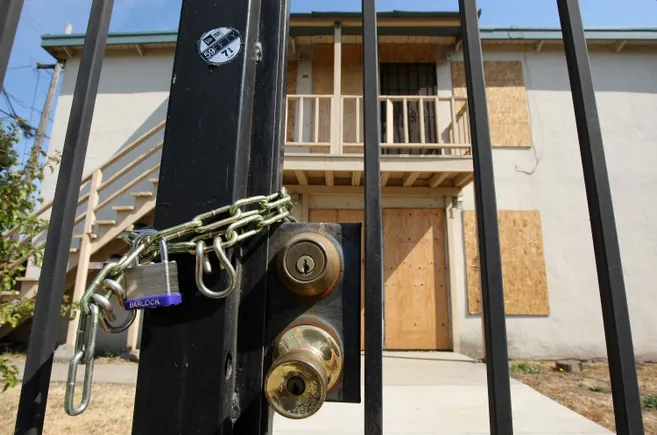
Like many multifamily investors, Jamison Manwaring is watching and waiting.
Manwaring is the CEO and co-founder of Neighborhood Ventures, a Phoenix-based real estate crowdfunding company that owns about 350 units in Arizona. He recently launched the "Arizona Multifamily Opportunity Fund," targeting the acquisition of 5 to 10 multifamily properties in the state, primarily focused on the middle market, hoping to buy at a 30% discount.
Although Manwaring is trying to target distressed assets and does see some apartment deals closing at 20% to 25% below their intrinsic value, he does not expect widespread pain in the apartment sector, even as more owners and developers face pressure from rising maturing debt and higher interest rates.
"We're not seeing widespread distress," Manwaring told Multifamily Dive. "We're just seeing it in pockets."
For investors with relatively modest buying appetites, localized distress may be enough for Manwaring to work with.
According to a recent report from Yardi Matrix, as loan coupons have risen 200 to 300 basis points, owners with floating-rate loans and expiring interest rate caps have seen their debt service costs climb significantly, with property values down 20% to 30% from their 2022 peak. However, investors expecting widespread buying opportunities at relatively cheap prices have been disappointed.
"Despite market expectations, opportunistic deals have been slow to materialize, as most owners and lenders prefer to avoid defaults through negotiated extensions," Yardi said in the report.
However, distress could intensify in 2024 as lenders slow down loan extensions, maturities increase, and interest rate caps expire.
'Extend and pretend' redux?
During the global financial crisis, a wave of apartment investors created opportunity funds anticipating that a wave of distressed assets would hit the market at deep discounts. While some buyers did find deals, many came away empty-handed because banks worked with distressed borrowers, offering extensions even when loans were not performing.

"The distress after the 2008 financial crisis never materialized as severely as most people expected, including me," said Paul Fiorilla, director of U.S. research at Yardi Matrix. "That was largely due to 'extend and pretend,' which is often used as a pejorative term, but it prevented defaults and reduced bank losses. As the market recovered, loans were repaid, and distress never really materialized."
That scenario appears to be playing out again on a smaller scale.
According to the Mortgage Bankers Association's 2023 commercial real estate loan maturity survey, of the $4.7 trillion in outstanding commercial mortgages held by lenders and investors, 20% ($929 billion) will mature in 2024, up 28% from the $729 billion that matured in 2023.
Initially, $659 billion in commercial mortgages were set to mature this year. However, extensions and modifications provided by lenders and servicers raised that figure to $929 billion. Another source, real estate data firm Cred iQ, reported that 441 commercial real estate loans totaling $13.6 billion were modified in 2023.
2024 commercial real estate maturities to rise
| Lender type | Total maturities | Share of maturities |
| Depository institutions | $441 billion | 25% |
| CMBS, CLO, ABS | $234 billion | 31% |
| Finance companies | $168 billion | 36% |
| Life insurance | $59 billion | 8% |
| Government-sponsored enterprises | $28 billion | 3% |
Source: MBA
Among all real estate sectors, apartments had the highest volume of loan extensions at $62 billion, followed by office at $55 billion, said Jim Costello, co-head of the real estate research team at data provider MSCI.
"We do see lenders being more willing to push the problem down the road, give some time, see if rates can come down a little bit so they can work with that sponsor," Manwaring said.
Essex Property Trust, a Palo Alto, California-based real estate investment trust, echoed that sentiment on its fourth-quarter 2023 earnings call, with CEO Angela Kleiman saying, "Lenders are generally accommodating in extending debt maturities for sponsors when it's feasible."
A change in attitude?
However, each lender's situation is different. "Not all debt providers and equity providers are able to extend loans," said Ben Schall, CEO of Arlington, Virginia-based AvalonBay Communities, on the REIT's fourth-quarter earnings call. "So, that does create the potential for dislocation. But we're not necessarily seeing it at scale. I would say we're prepared to jump on opportunities as they arise."
Banks, which are traditionally subject to capital reserve requirements, have slowed new lending while working with existing borrowers and regulators allow them to extend loans, according to observers. Costello said national banks led all lender groups in commercial real estate loan extensions at $53 billion, followed by regional banks at $52 billion.
Investor-driven lenders, such as debt funds and collateralized loan obligations (CLOs), provided $34 billion in extensions. But according to some observers, they have become more aggressive in taking over properties. "They take back the asset and ensure they protect their principal by reinvesting in the asset as equity," said Vincent DiSalvo, chief investment officer at Kingbird Investment Management, a Boston-based apartment owner.

Commercial mortgage-backed securities (CMBS) lenders, which hold about a 2% market share, have less flexibility, Fiorilla said. "CMBS is less flexible because its problem loan process goes through a special servicer," he said.
If more lenders start dragging their feet on extensions, owners will be forced to bring distressed properties to market. "As loans mature and extension agreements reached with lenders last year expire, owners of stabilized assets will face transactional pressure," said Alec Brackenridge, chief investment officer of Chicago-based Equity Residential, on the REIT's fourth-quarter earnings call.
Rising maturities
As lenders decide whether to extend, they will soon face a growing wall of multifamily maturities. According to a Yardi report, $61.8 billion will mature in 2024, with another $84.3 billion maturing in 2025.
Extending the timeline further, the maturity picture is staggering. According to Yardi data, over the next five years, loans on 58,533 properties, representing $525 billion of the $1.1 trillion in total loans currently backed by apartments, will mature.
Apartment executives see this wave of maturities as potentially creating buying opportunities. "We're not seeing a lot of distressed selling in the market right now," said Rylan Burns, senior vice president of investment strategy at Essex, on the REIT's fourth-quarter earnings call. "Given the volume of debt maturing over the next few years, we expect there should be some opportunities."
National maturities by year forecast
| Year | Total |
| 2024 | $61.8 billion |
| 2025 | $84.3 billion |
| 2026 | $89.3 billion |
| 2027 | $77.9 billion |
| 2028 | $107.3 billion |
Source: Yardi Matrix
Investors on the private side share that view. "We think there will be opportunities in some of the upcoming maturity wave," said Doug Faron, managing partner at Shoreham Capital, a West Palm Beach, Florida-based owner of apartments and single-family rentals.
In addition to rising maturities, expiring interest rate caps could also force sales. Borrowers with floating-rate debt typically purchase interest rate caps to set a ceiling on their borrowing costs if rates rise. Without these caps, they would pay higher debt service amounts.
"Interest rate caps purchased in 2021 and 2022 are expiring this year," Manwaring said. "That's a significant catalyst pushing some properties that were previously functioning fine because they were still paying 3.5% and 4% interest rates, and now their rates will go up to 7.5%."
Once borrowing costs rise as caps expire, Manwaring believes these owners will be forced to sell. "In the last two or three months, we've seen some sponsors directly say, 'Hey, we're going to cut our losses.' The monthly operating costs are just too high."
A potential lifeline
With maturities rising, interest rate caps expiring, and banks less likely to extend problem loans, this year seems poised to bring more troubled apartment loans. There are already signs of trouble.
According to a report from real estate data firm Cred iQ, the multifamily distress rate led all commercial real estate sectors in February, rising 80 basis points to above 3%. The data firm, which derives the distress rate by aggregating payment and special servicing status for each loan, said the multifamily sector recorded its largest monthly increase in distress in 18 months in February.

Fiorilla sees localized distress in certain markets, but not a systemic problem. "I can see delinquency rates rising, but not to the point of causing a systemic crisis," he said.
Some veteran CEOs share that view. UDR CEO Tom Toomey said on the REIT's fourth-quarter earnings call that he believes the scope of distress is one or two (presumably REIT-quality) deals per market that buyers will pick off.
Toomey said the presence of Fannie Mae and Freddie Mac as capital backstops should limit distress. Camden Property Trust CEO Ric Campo believes falling interest rates will keep damage to a minimum.
"That relieves the pressure on some people having to sell," Campo said on the Houston-based REIT's fourth-quarter earnings call.
If that happens, many with visions of deep discounts may once again be disappointed.
Clickhereto sign up to receive multifamily and apartment news like this in your inbox every weekday.