
Frank Cassidy on Driving Multifamily Housing Loan Policy Reform at HUD
Frank Cassidy joined HUD in April 2025 and was confirmed by the Senate in December of that year, serving as FHA Commissioner and Assistant Secretary for Housing. During his tenure, he drove multifamily housing loan policy reforms, including reducing mortgage insurance premiums, streamlining environmental reviews, and working to transform the agency's culture. This article is an interview with him by Multifamily Dive, in which he discusses industry challenges, policy achievements, and future outlook.
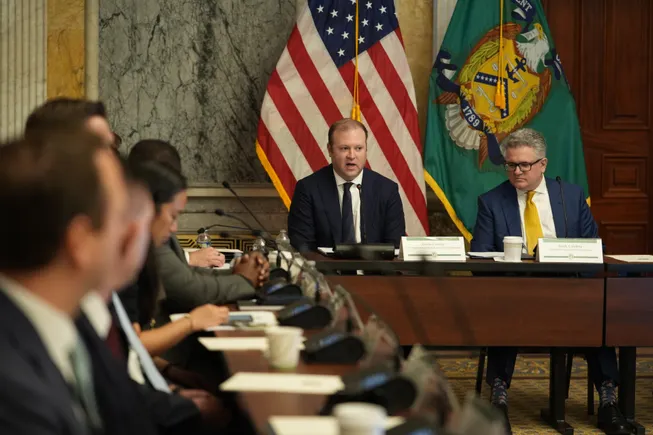
In early June, veteran commercial loan originator Frank Cassidy stepped down as Commissioner of the Federal Housing Administration (FHA) and Assistant Secretary of Housing at the Department of Housing and Urban Development (HUD). He returned to the private sector after driving what he called a "generational change" in the agency's multifamily lending programs.
Cassidy joined HUD in April 2025 and was confirmed by the Senate in December 2025, after which he quickly advanced multifamily priorities. He led HUD's Office of Housing, which oversees the FHA's single-family, multifamily, and healthcare mortgage insurance programs.
"Typically, this position is held by someone from the single-family sector," Cassidy said. "The FHA is a $2 trillion mortgage portfolio, about 90% of which is single-family, representing one-fifth of all mortgages in the country. So, the multifamily and healthcare programs are often overlooked, but that's where I come from, and that's where I knew we could create efficiencies."

Cassidy's career has always focused on multifamily finance. During college, he joined the financial institution Oppenheimer & Co., which had a small FHA/HUD lending arm specializing in multifamily, senior housing, and healthcare transactions. There, he called owners of FHA-insured multifamily loans across the country, pitching them refinancing options.
"I convinced my boss to hire me as an originator on my first day after college graduation. Typically, to become an originator, you need five to ten years of experience as an underwriter or analyst to learn the business. My first few years in the industry were spent making cold calls, which I call 'dialing for dollars,'" Cassidy said.
The company was acquired by financial services giant Walker & Dunlop in 2016. It was there that Cassidy received a call from the White House in February 2025. He had built some connections with the Trump administration and its inner circle, and said it was "a once-in-a-lifetime opportunity to serve the country, especially in an area directly related to what you've done your entire career in the private sector."
Here, Cassidy speaks with Multifamily Dive about his time at HUD, the ongoing challenges facing multifamily, and what still needs to be done to incentivize housing development.
This interview has been edited for brevity and clarity.
MULTIFAMILY DIVE: What is the biggest challenge facing multifamily developers right now?
FRANK CASSIDY:Right now, I think it's making the numbers work on deals. We're in a high-interest-rate environment, and that's exactly when FHA financing comes into play. It's a counter-cyclical lending program, so when deals are harder to get done and there's less capital in the market, the FHA really needs to step up. We offer 35- to 40-year fixed-rate, fully amortizing loans with a debt service coverage ratio of 1.11, making it easier to make these deals work.
What are you most proud of during your time at the FHA and HUD?
The 221(d)(4) program is really the only federal program that can actually deliver new housing, so given the state of the housing crisis, I felt we had to do more. One of the big things we did on day one was that Ireduced the multifamily mortgage insurance premium across the board to 25 basis points. For every FHA-insured multifamily loan, there's a fee called the MIP (mortgage insurance premium); it's part of the interest rate and pays for the FHA's guarantee on the loan.
Before I made that change, there were about six to twelve different categories depending on the property type—affordable housing, broadly affordable, market-rate, or green energy. During the Biden administration, they implemented a policy that basically said if your building is green energy, you could get a 25-basis-point MIP, which was the lowest level.
So, all developers had to pay third-party environmental organizations to certify their buildings, costing hundreds of thousands of dollars. It was massive bureaucratic red tape, and the reality is that these buildings were already meeting these standards. I was thrilled to go from being a young college student originating these loans to being FHA Commissioner, managing the entire program, and making these major changes.
What other multifamily policy changes would you like to highlight?
The other thing we did in multifamily before I left waseliminating environmental review requirements, to make it easier to develop more housing. We issued a mortgagee letter. Some deals were being held up because they were near railroads, had pressure pipelines, were near high-voltage lines and falling hazards, or were too close to train stations. So, we removed many of these restrictions, making it much easier and more efficient.
What shifts did you see at HUD during your tenure?
There's been tremendous demand for FHA multifamily loans, largely thanks to the policy changes I implemented. The FHA and HUD were previously seen as difficult to get deals done with—they always wanted to say no. So I kept telling the career staff: 'Look, let's find ways to responsibly say yes, and if a deal has challenges, let's figure out how to mitigate the risk so the deal can get done.' A lot of the feedback I got from lenders was that we really changed the entire culture of HUD's career staff.
What changes would you still like to see?
These deals shouldn't take six to twelve months to close. Under my leadership, we got it down to three to six months, but we need to prioritize speed and efficiency in underwriting and closing. We need to let lenders do more, delegate more authority to lenders, and ultimately move closer to a delegated underwriting and servicing model like Fannie Mae's, where lenders do all the underwriting, make pricing decisions, but if a deal goes bad, they share in the loss. I was considering such a model, but unfortunately, we ran out of time.
What are your thoughts on the Housing Roadmap to 21st Century Act?
That was a greatbipartisan piece of legislation, and it would be the biggest housing legislation passed by Congress, and it would happen under President Trump's administration. It would really streamline and deregulate many of the issues developers face when building new housing. I know the bill is still being negotiated between the House and Senate, but I'm very optimistic it will pass.
What else needs to be done to address the housing crisis?
Basically, you can't regulate your way out of the housing crisis; you have to build your way out. What I see is government overreach and policies that hinder the development of new housing. I think we need to roll those back, and the federal government's role is to support the private sector in achieving these goals.
The housing crisis is not just a demand problem; it's also a red tape problem. You can't subsidize your way out of a housing shortage. You have to build your way out by reducing red tape and mortgage costs, and by making it easier and more streamlined to bring new housing online. It's a complex issue, but ultimately we need to prioritize supply-side initiatives.
Clickhereto subscribe and receive similar multifamily and apartment news in your inbox daily.