
Korman Communities CEO: Choosing to Rent Is 'Sweeping the Globe'
Brad Korman, Co-CEO of Korman Communities, recently sat down for an exclusive interview with industry media, sharing insights into the family business's operating philosophy, project site selection logic, and his outlook on the U.S. multifamily housing market. He believes that as young people seek mobility and empty nesters pursue convenience, choosing to rent is becoming a mainstream trend.
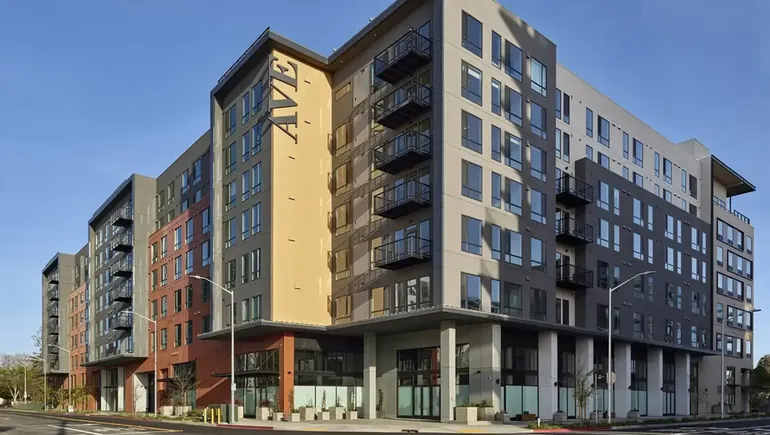
Multifamily housing has been a part of Brad Korman's life. Growing up, the co-CEO of Philadelphia-based Korman Communities often spent weekends with his father and two brothers visiting the family business's construction sites, leasing centers, and apartment buildings. There, he mowed lawns, painted, and interacted with team members and residents.
Over the past 30 years, Korman, along with his brothers Larry and Mark, has transformed this five-generation family real estate business into a national multifamily company. Korman Communities has expanded from the Philadelphia area to major cities such as New York, Miami, Los Angeles, Boston, Dallas, and Austin, Texas.
The company recently completed projects in Santa Clara, California; Paradise Valley, Arizona; and White Plains, New York, and has broken ground in Denver and the Philadelphia Navy Yard area.

Korman operates multiple brands to meet the needs of different residents. Its AKA brand offers long-stay luxury hotel-style apartments with full amenities, while the AVE brand's mid-rise apartments offer flexible lease terms with furnished or unfurnished options.
The core philosophy of AVE is that 'people want convenience, service, a sense of community, and still want to have choices,' says Korman. The average stay in an AVE unit is about seven months, he says, which allows those going through life transitions or short-term work assignments to live in a place that feels like home without buying new furniture or signing a one-year lease.
'Whether residents choose furnished or unfurnished, short-term or long-term, we can take care of them and make them truly feel at home,' says Korman. 'They feel cared for, and that's what sets our AVE platform apart.'
In this interview, Korman discusses the management of a family business, how the company navigates interest rate fluctuations and rising construction costs, and the future of multifamily housing.
This interview has been edited for length and clarity.
MULTIFAMILY DIVE: You work alongside your brother Larry, following in the footsteps of your father Steven, and Korman Communities is truly a family business. What are the advantages and challenges of running such a family business?
It's a very, very good opportunity, with far more advantages than challenges. However, if you ask my wife, when a three-year-old's birthday party at The Little Gym turned into a business meeting 30 years ago, she might tell you that there were indeed some challenges and frustrations.
So, finding boundaries, finding the balance between work time and family time, and how to bridge those gaps takes some skill and varies from person to person. But for us, we love it all. Sometimes it does bring complications, but the advantages far outweigh the disadvantages.
I mean, how lucky am I? Last week my father was in the office, my sons were in the office, my brothers were in the office, and we had lunch together, sitting together. You don't have to wait until Thanksgiving to enjoy those moments. So having that opportunity every day is very special.
What factors does Korman consider when deciding whether to invest in a project or acquisition?
We focus on job growth. Many multifamily developers focus on other factors, but we look at job opportunities within a 1-mile, 3-mile, or 5-mile radius of an area. That's our top priority. We want to ensure people work there and want to live there.
On top of that, we look at public transit, amenities, and the retail environment, but we really focus on areas with high job density. Frankly, we are currently focused on developing Class A and Class AA projects.
What are the biggest challenges facing multifamily developers today?
Over the past few years, construction costs and interest rates have been the two biggest challenges. Interest rates were low for a long time, and people got used to them. The rise in rates—not that rates are particularly high now; we've just returned to the norm of the past 30 years—but compared to the previous 10 years, the change has been so significant that it has unsettled many people.
So, we try to find a stable level and predictability for interest rates, like saying: 'Okay, we think the 10-year Treasury yield is between 4% and 4.5% now, and it will stay there. It won't spike to 6%, but it won't fall back to 1% either.' That's the current situation.
My underwriting for new projects must reflect the current state of the debt market, so understanding that has been a challenge. But it feels like there is more predictability now.
Have material costs been rising this year due to the war in Iran? If so, has that made project underwriting more difficult?
For us, it has indeed become harder to make a large project truly pencil out. For every new project we start, we reject 60 to 80 deals. Sometimes the project is just too difficult and margins are too thin, and we won't put our capital and our partners' capital at risk by hoping material costs will decrease by the time of construction.
Remember, when you build a new multifamily project in a prime location, it takes about five to seven years from groundbreaking to stabilized operations. You have to acquire the land, go through the zoning process, obtain land use and building permits. Then you need to complete the design and get approvals, then construction documents, and then build for two years.
It's a long process, so when we start a project, if margins are too thin, by the time it's completed, interest rates could have risen significantly, construction costs higher, and utilities and insurance more expensive. The whole process becomes an uphill battle. So as costs rise, we reassess and don't just start projects hoping things will improve.
When we do start a project, we've done as much upfront work as possible, purchased materials, and done our best to eliminate risk.
Where do you see the multifamily economy heading?
The new American dream is no longer buying a house, living in it for 30 years, paying off the mortgage, and owning it. Many successful people today don't want that lifestyle.
Young people, whether burdened by college loans and unable to afford a home, or simply wanting mobility, want the opportunity to go different places without being tied down. They don't want to pull money out of the stock market for a down payment.
Empty nesters are saying: 'You know, I'm tired of water heaters breaking, shoveling snow, or roof leaks. I want to move to a place where I can live well, with a sense of community, wellness, convenience, and activities. These quality multifamily projects can provide all that.'
Now, people who choose to rent are truly 'taking over the world.' The properties we build today are much better than many people's owned homes. How many people have a fitness center, resort-style pool, business center, outdoor space, golf simulator, or home theater in their own home? Yet, they can live in a beautiful community and enjoy that sense of belonging.
When I visit properties and hear residents tell me they feel cared for, that the team knows them, that this is their home, that life is simpler and better, I am very pleased. So I think the multifamily industry will continue to grow.
Correction: An earlier version of this article misdescribed the AKA brand.
Click here to subscribe and receive multifamily and apartment news like this in your inbox every business day.