
Alliance Residential Locks In 2,000 Apartment Units Within Six Months
After selling its management business to Greystar in 2020, Alliance Residential focused on development and ranked high on the NMHC developer list. Recently, the company has aggressively returned to the acquisition market, purchasing more than 2,000 apartment units across several states within a few months. Its acquisition head details target asset types, transaction competition, acquisition opportunities for new developments, and development prospects.
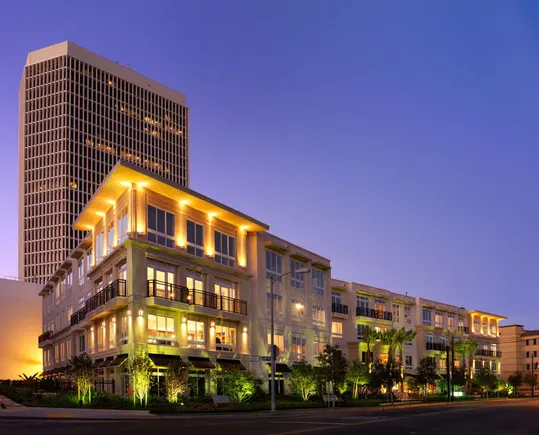
Since selling its property management business to Greystar in 2020, Scottsdale, Arizona-based Alliance Residential Co. has transformed into a development-focused industry player. In the latest National Multifamily Housing Council (NMHC) Top 50 Developers list, the company ranked 4th with 5,501 starts in 2025. Looking back, it topped the list in 2023 with 13,480 starts and ranked 2nd in 2022 with 11,739 starts.
However, the company has also been making significant moves in the investment acquisition space recently. According to a press release provided to Multifamily Dive, from December 2025 to March 2026, Alliance Residential has acquired more than 2,000 apartment units across California, Texas, Florida, and Pennsylvania.
"Over the past decade, we focused primarily on development," Stephen Squatrito, managing director of Alliance Residential's Western Region acquisitions, told Multifamily Dive. "But the market cycle now favors buying, and we've expanded our team and platform to grow our acquisition efforts."
According to the press release, since late 2025, Alliance has acquired Hawthorne Apartments in Riverside, California, Broadstone Miracle Mile in Los Angeles, Wyncrest Bala Cynwyd in Philadelphia, Santoro in Houston, and North Park Landing in Fort Worth, Texas, all at prices significantly discounted from replacement costs. Additionally, the company expanded its presence in the Orlando, Florida market through the January acquisition of Stevens Pointe and the May acquisitions of Avalon Pointe and Horizons Village.
The company's current target areas include California's Inland Empire, Greater Los Angeles, Philadelphia's Main Line, Houston's The Heights/Memorial corridor, Florida, and North Texas.
"We've built out a dedicated East Coast team and also expanded our West Coast team to find and execute deals," Squatrito said. "We hope to complete as many acquisitions as possible before asset prices rise too quickly."
The following is a transcript of Squatrito's conversation with Multifamily Dive on topics such as deal competition, acquisition opportunities for new developments, and the development environment.
This interview has been edited for length and clarity.
Multifamily Dive: When did you really start focusing on acquisitions?
Stephen Squatrito:Since 2022, we've been slowly looking for opportunities, trying to find assets that fit the 'below replacement cost' logic while also aligning with our value-return strategy. We had some wins in 2024, completed one or two deals in 2025, but really put in significant effort from 2023 to 2025. Now, the bid-ask spread between buyers and sellers is finally starting to narrow. Some deals were initiated six months before closing. In the first quarter, we closed on six new projects, and there are three more coming up.
Are you targeting older value-add properties, new developments, or both?
Until 2023, and even now, the value-add strategy remains our core. But recently, we've also been focusing on well-located new assets that can be bought below replacement cost or have operational inefficiencies. In some cases, we inject new capital into underfunded projects to help stabilize their operations. Overall, this allows us to wait out the oversupply period or bring projects to stabilization through capital injection. We do see value in that. Additionally, we're also correcting operational issues—some companies are self-managing or understaffed in the current competitive environment.

We're still pursuing what we consider reasonable value returns, but we've significantly broadened the range of target assets. It's not just older properties from the early 2000s needing countertop renovations—though those opportunities still exist.
Is it difficult to find and secure these properties?
Finding sources requires more effort. Successful deals increasingly come from off-market or second-round sale processes. The widely marketed bidding process is still very crowded, with a lot of capital chasing the same small set of projects. However, there is a fair degree of alignment among parties on valuation methods.
Where are you finding these properties?
We're finding that some large closed-end funds still have stranded assets, which eventually say 'okay, we're out.' Or, these assets are genuinely distressed, with debt maturing and owners having few options—either needing a massive capital injection they can't afford, or in some submarkets or metro areas still facing an expected two-to-three-year downturn, where 'cutting losses sooner rather than later' might be the more realistic choice.
Is it more time-consuming to find these deals?
It takes a lot of effort to unlock these opportunities, much more time than in the past. We remain patient, stay on top of opportunities, and keep following up. We're starting to see some projects we previously invested time in come back into view—either sellers are more willing, or on-site operations have improved, allowing us to increase our valuation of the project and thus narrow the gap.
Many new developments are entering the market—what's the story behind them?
Some projects may have already paid off their construction loans and switched to more expensive debt fund capital. When that debt matures, refinancing or adding new debt requires a massive capital injection. In other cases, projects can't complete leasing, leaving their value still well below the construction loan balance, making refinancing unfeasible. However, I think for most distressed debt opportunities, the problem isn't primarily with the construction loans.
How does Alliance view the near-term development outlook?
The door to development isn't closed, but in the current environment, finding truly viable development opportunities has become more difficult. The factors that make acquisitions attractive also make new developments harder to pencil out. Construction loans have started to loosen slightly, but given effective rent levels, it's hard to achieve the untrended yields that capital partners require. That said, projects started now are expected to deliver in 2027-2028, when competition is expected to be much less. Therefore, I think the current backdrop is very favorable for disciplined starts.
Clickhereto subscribe and receive similar multifamily and apartment industry news via email every business day.