
Morgan Properties Evaluates Acquisition Opportunities: Long-Term Holding Strategy and Workforce Housing Positioning
Morgan Properties has risen from No. 35 in the NMHC ranking in 2016 to No. 2 in 2026, with managed apartment units growing from 32,384 to 110,475. In the interview, Chief Operating Officer Greg Curci details the company's acquisition strategy: adhering to a workforce housing positioning, with approximately 55% of assets built in the 1960s-1970s and resident median household income slightly below $75,000; adopting a 10-year holding period model without rushing short-term exits; daring to acquire large, older, poorly managed assets and implementing multi-year comprehensive renovations; while flexibly entering secondary and tertiary markets. Curci also notes that current distressed assets fall into two categories: seller distress and asset deterioration itself, observing over the past six months some properties with occupancy rates as low as the 70% range, but most opportunities still do not warrant taking on debt.
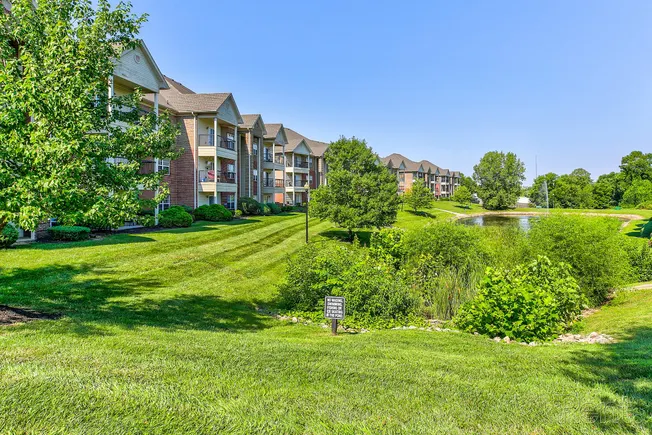
Ten years ago, finding Morgan Properties on the National Multifamily Housing Council (NMHC) top 50 list required scrolling far down. In 2016, the Conshohocken, Pennsylvania-based company ranked 35th with 32,384 apartments.
Over the past decade, however, Morgan Properties has become one of the strongest growth stories among multifamily owners. This year, the company jumped to No. 2 on the NMHC list with 110,475 apartments.
As the company has scaled, its mission as a provider of workforce housing has remained unchanged.
"The company was founded by Mitch Morgan in 1985, and he bought his first property in the suburbs of Philadelphia, which we still own today," Chief Operating Officer Greg Curci told Multifamily Dive. "When he bought it, the property was about 20 years old."
According to Curci, roughly 55% of Morgan Properties' portfolio consists of properties built in the 1960s or 1970s, and the median household income of residents is just under $75,000.
"We have always gravitated toward acquiring properties that may need significant capital for repositioning or to cure deferred maintenance, and likewise, properties that may be operationally challenged," Curci said. "We are used to operating in the workforce housing space, and that commitment has never wavered."
But 20% of Morgan Properties' portfolio consists of newer properties. "We have nine different joint venture partners that we acquire assets with," said Curci, who joined the company in 2019. "They each have different investment preferences."
Here, Curci discusses with Multifamily Dive Morgan Properties' investment strategy, apartment renovation approach, and distressed asset acquisition opportunities.
This interview has been edited for brevity and clarity.
Multifamily Dive: Despite short-term economic concerns and oversupply in some markets, Morgan is still acquiring properties. What is the thinking behind this strategy?
We have always been active on the acquisition front. We tend to have longer hold periods. We are not the type of fund that is in a rush to deploy capital and return it within five years. Most of our partners share our view of holding long-term.
From an underwriting standpoint, we typically model a 10-year hold. We will also do a five-year projection as a sanity check, but in many cases, we actually hold for longer than 10 years. When you have that kind of time horizon, it takes the pressure off having to perfectly time the market.
Does the longer hold period help you take on more complex renovation projects?
We enjoy acquiring and improving asset types that other investors shy away from. I mean, we buy properties with 1,000 units, and we have even purchased a 2,000-unit project. These are large assets. Not everyone has the operational capability or the appetite to deploy the capital needed to upgrade and maintain properties of this size and age.
We acquire properties that are operationally unstable, those with occupancy around 80% and a lot of deferred maintenance. We recognize that changing the trajectory of these assets takes a considerable amount of time, but we are patient in that regard.
Are you also flexible when it comes to choosing acquisition markets?
We are not shy about going into more secondary and tertiary markets either. Other companies in the industry often have a clear mandate and must clearly articulate their investment strategy, such as 'we go into these 10 core markets based on job growth, population growth, or income levels,' and then only target those markets.
We are more opportunistic. We wait for the right opportunity to present itself. We never know what the portfolio of assets in front of us will look like. But we always try to be creative and ask ourselves: 'Does this fit our operating model?' — which is improving typically older product and bringing in our operational expertise.
When you acquire these properties, what management upgrades can you implement?
Our product type is older, but our operating platform is quite modern. So, many times when we acquire these assets, they often come from owners with less operational experience. For us, there is a considerable amount of opportunity there, but that opportunity cannot be realized within a year. We are not buying a 2000-vintage asset, upgrading 200 kitchens, and then re-leasing it to the market.
It is more of a holistic approach. We may need to replace all the exteriors and roofs. There are also plumbing issues, broken diverters. It is a multi-year community revitalization process, but I will also say that we do acquire single assets as well. Our preference really depends on the investor.
How do your investors influence these decisions?
Some of our investors are only interested in writing large checks, which leads them to prefer portfolio acquisitions. Some investors have been with us for 15 years, and they only want to buy one or two deals a year. So, we will complete a series of single-asset acquisitions, but we may not issue a press release for those.
Distress is growing in these older properties. Are you seeing acquisition opportunities?
People talk about waiting for distress to appear to get great acquisition opportunities. I think we are finding that there are two types of distress.
One is seller distress: they have run out of money, but the product type is still decent. Maybe we can inject some rescue capital. The other is where the asset itself has deteriorated to the point where it seems not worth taking on the debt. People are either in mid-term default, or the loan is about to mature, and they cannot reasonably refinance without injecting additional equity.
I am shocked by some of the things I have seen in the past six months. We are seeing occupancy as low as the low 80s or even high 70s, with a lot of bad debt and economic vacancy, possibly in the mid-to-high 60s. It is almost unbelievable how they got to that point. In multifamily, it is almost impossible to push occupancy that low.
So, while we are looking at these opportunities, we are also somewhat frustrated because many of these opportunities are not worth enough to cover their debt.
Clickhereto subscribe to receive multifamily and apartment news like this in your inbox every business day.
