
PPR Capital Management Launches $100 Million BTR Fund, Targeting Market Window Opportunity
PPR Capital Management officially launched the PPR Keystone Housing Growth Fund, targeting $100 million in fundraising to invest in build-to-rent (BTR) properties that are already built or in the leasing phase. The fund aims to leverage a short-term market opportunity arising from regulatory uncertainty.
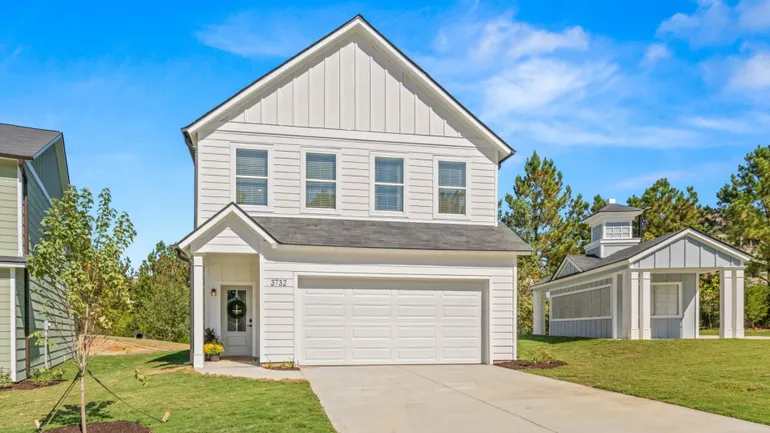
PPR Capital Management announced the launch of the PPR Keystone Housing Growth Fund, targeting $100 million in fundraising to invest in build-to-rent (BTR) properties that are fully completed or in the leasing phase. The fund is managed by PPR Capital Management, a commercial real estate investment firm based in Wayne, Pennsylvania, and aims to capitalize on a temporary window of opportunity created by regulatory uncertainty in the market.
According to Craig Johnsen, Chief Asset Officer at PPR, when PPR began preparing the fund, the U.S. Housing Pathways Act was still being drafted. Although the Senate passed a version of the legislation that raised questions about the future of institutional investment in single-family rentals, Johnsen said PPR was "fairly confident" that exemptions would be carved out for specific investment types.
Earlier this month, the revised housing bill was signed into law. Subsequently, PPR announced the launch of the fund, targeting BTR properties that have already obtained or are close to obtaining certificates of occupancy, meaning projects where the developer has already assumed development and construction risk. This information comes from a press release PPR provided to Multifamily Dive.
Johnsen revealed that PPR has identified 10 high-growth, supply-constrained single-family housing markets with strong rental demand and has made "soft commitments" to two properties in Charlotte, North Carolina, and one property in Nashville, Tennessee. However, he did not disclose the specific names of these communities.
"We plan to complete the first closing within 60 to 90 days," Johnsen said, "but there will be some flexibility in the timeline."
PPR plans to hold these properties for 5 to 7 years. Johnsen said: "The strategy is clear: acquire properties and arrange some form of aggregation financing facility with a term of 12 to 18 months to help each property achieve stabilized operations. Once stabilized, we then transition them to institutional debt."
Clear objectives
Johnsen noted that many BTR developers initially planned to build communities, lease them, and then sell. But the current market faces several obstacles, especially debt maturity issues.
"They are struggling with leasing because the competitive environment is much more intense than expected, and they cannot achieve the desired rental levels," Johnsen said. "They originally thought they could rent each unit for $3,000, but now they can only get $2,500."
Additionally, discussions around the federal housing bill have created market uncertainty, but also opportunity—many "large capital players" who exited the market due to regulatory uncertainty have left a gap.
"Developers originally thought they would have a soft landing on the capital side," Johnsen said.
Currently, Johnsen believes there is sufficient supply of vacant or partially leased properties in the market to support the $275 million to $300 million PPR has reserved for acquisitions after adding leverage. But this opportunity will not last forever.
"This is a market window that I think will last about two years or so," Johnsen said.
Clickhereto subscribe and receive daily multifamily housing and apartment industry news.
Correction: A previous version of this article contained incorrect information about Craig Johnsen's title. This has been corrected.