
Nine Trends in Multifamily Residential Amenities in 2023
The pandemic and the normalization of remote work have profoundly changed the demands of multifamily residential tenants for amenities. Industry experts point out that the past amenity arms race, primarily aimed at attracting young professionals, has come to an end, replaced by an emphasis on flexible workspaces, integrated common areas, and health and outdoor experiences. Based on interviews with multiple design, development, and asset management companies, this article summarizes nine amenity trends worth noting in 2023, including segmented flexible workspaces, amenity integration, small rental offices, rentable items, grab-and-go convenience stores, health and wellness, outdoor spaces, pet facilities, and community connection.
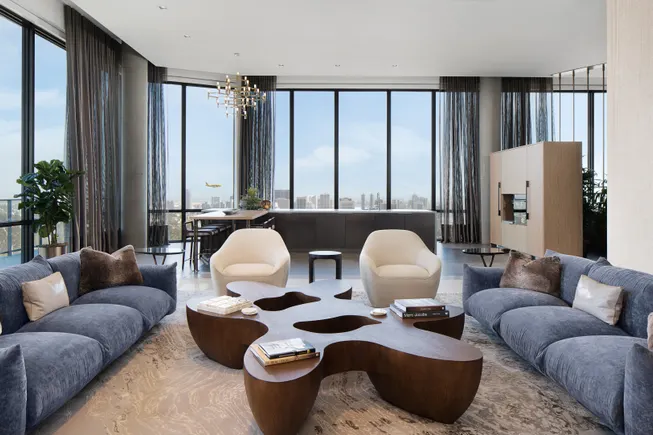
The COVID-19 pandemic and the shift to hybrid and remote work it triggered have had a profound impact on the amenities that multifamily housing residents value most.
The pre-pandemic "amenity arms race" aimed at attracting young professionals is gone. Today, common spaces outside the unit are more dominated by remote work, and many former entertainment venues—such as demonstration kitchens or media rooms—have transformed into coworking hubs during the workweek.
Against this backdrop, Multifamily Dive spoke with several industry professionals about which amenities resonate most with residents. The following is a list of amenities residents may seek in 2023.
Segmented and flexible office spaces

Given the ongoing impact of the COVID-19 pandemic, common spaces are no longer used as frequently for large gatherings as they once were. Ryan Kimura, senior vice president of strategic partnerships at Dallas-based design firm Premier, told Multifamily Dive: "Amenities like media rooms are gradually falling out of favor. They used to have some use in buildings, but now, especially after the pandemic, people are more cautious about being in a room with a group of strangers."
However, since many multifamily residents work from home permanently or in a hybrid arrangement, these rooms can be repurposed as workspaces for individuals or small groups. Gary McLuskey, managing director of global design at Greystar, has observed a surge in demand for office space at properties worldwide. To that end, he and his team have been exploring how common areas can serve as both lounges and quiet workspaces.
McLuskey told Multifamily Dive: "When we think about amenity spaces now, we ask: If there's a lounge area, can you work there? What conditions are needed? Do we need to run more cabling so people can plug in their laptops? If you're designing office space for multifamily housing, you should also consider how a lounge area can double as office space. How can a demonstration kitchen be used as office space?"
Faced with a large empty room, Kimura said: "Our design team might lay down a few large area rugs, add tables and chairs, so that even if there are four or five other people in the building, I still feel enclosed within a circle of friends." He added that the goal is to create the feel of a community café—a place where residents can be among people while still having their own space.
Amenity consolidation

In addition to the need for separate office spaces, McLuskey has observed that small, isolated amenity areas scattered throughout a multifamily building can become problematic when people are concerned about catching the virus. While people want to be alone in a small space, they don't want to be in small groups—especially not with strangers. This both limits the number of people who can use a given amenity at the same time and restricts resident interaction.
Therefore, he and his team have focused on consolidating amenities into more open common spaces. McLuskey said: "One of the key things we're focusing on is integrating amenity spaces to make them larger, more connected, and less compartmentalized. Why not integrate the mailroom into the lobby with furniture to create a larger space?" Caroline Kerka, project coordinator at MA Design, a design and architecture firm headquartered in Columbus, Ohio, said the company has taken a similar approach. Kerka said: "Flexible spaces make it possible for living, working, and recreation to occur in the same space. Residents want to step out of their apartments and gather in more communal spaces. If shared spaces are well planned, they may continue to be popular."
Smaller leasing offices

Years ago, a leasing office needed an entire room to store paper files that every resident was required to keep for a certain number of years. Today, most systems have gone paperless, and leasing agents only need a few private offices (in case residents want to talk behind closed doors) and a staff break room, Paige Byrd, co-president of Dallas-based interior design firm Thiel & Thiel, told Multifamily Dive.
She said: "The goal recently has been to minimize the leasing footprint and the transactional experience of talking across a desk, so that when a prospective resident walks in, they immediately experience the club space and coworking space. Ultimately, the manager can lock up the small leasing area, and the rest of the space is available to residents around the clock." She noted that in some properties, the space freed up by shrinking the leasing office is now being used for fitness areas.
Rentable items
Kimura has found that one successful service in multifamily buildings is offering rentals of household items, such as vacuum cleaners or power drills, which residents may only need temporarily. Kimura said: "A lot of times, people really need to drill a few holes in the wall to hang pictures, but they don't really need a $100 drill. Think of hotel-style concierge services."
At certain locations—including a new project Premier is developing in Tempe, Arizona—rentable items can even extend to outdoor equipment, such as bicycles or kayaks. Kimura said: "Some people might want to own a kayak, but if you've ever seen a kayak in an apartment, it's usually leaning against a wall on the patio or balcony." In such cases, rentals would solve the storage problem for specialty equipment that residents may only use a few times a year.
Grab-and-go convenience markets
According to Kimura, inspired by successful practices in the hospitality industry, some developers are capitalizing on this growing trend by offering small convenience markets within their properties, where residents can take items and have them charged to their unit account. This provides both an additional service for tenants and an additional revenue stream for the property. Kimura said: "Developers can't raise rents 20% every year. So they think, 'Can I capture some revenue from the people who would walk across the street to 7-Eleven, while also making it an amenity?'"
Health and wellness

Ryan Moody, vice president of creative design at Cleveland-based multifamily company The NRP Group, said health and wellness will be an important part of future amenity packages. Moody said: "We've put a lot of effort into our fitness centers and have had success." In the past, the company took a more traditional approach with cardio and strength equipment, but in recent years it has introduced a broader range of fitness options, including yoga, Pilates, and other fitness classes. NRP is also considering adding auxiliary spaces to fitness centers to serve as lounge areas for users. Moody said: "I see it as a gathering space where many people interact, with a juice bar and different hydration options. I think there's great potential and opportunity for that in our communities."
Outdoor spaces

According to Alex Walenta, executive vice president and head of asset management at Chicago-based developer Fifield Cos., told Multifamily Dive, multifamily housing saw a surge in demand for outdoor space in the early days of the pandemic, and residents are still seeking indoor-outdoor connections in their living experience. Walenta said: "The demand for amenities that support remote work and for features that allow residents to enjoy the outdoors, such as resort-style terraces and rooftop decks, will persist. We're seeing more designs that bring the outdoors in and create better indoor-outdoor connections."
Beyond standard courtyards, some multifamily properties are getting more creative with outdoor amenities, including CrossFit workout areas and meditation gardens. Kerka emphasized that residents particularly value being able to enjoy outdoor spaces close to home. Kerka said: "Being stuck at home brought everyone outside. We learned about the benefits of biophilia during the pandemic, but people want to get outdoors, not just bring the outdoors in. Shared courtyards, pool decks, rooftops, and balconies became the public parks or other spaces we craved during the pandemic, yet at the same time allowed us to feel comfortable within our own building or community, while private balconies became both courtyards and sanctuaries."
Pet amenities

Experts are unequivocal about the necessity of pet amenities in multifamily properties. Moody has observed a surge in the number of residents with pets since the start of the COVID-19 pandemic. Currently, more than half of residents at any NRP Group property have a furry friend. Kimura specifically pointed out that pet wash stations are almost a necessity. He said: "If you don't have a pet wash station, but you cater to dog owners, and you're doing a renovation, then you need to think about where to put one."
Walenta agreed, emphasizing the importance of pet amenities to resident satisfaction. She said: "Having a place to keep pets clean, such as a well-equipped pet spa, as well as a space for them to go outside for natural breaks and play, is something residents value."
Community connection
In a recent survey of 1,500 apartment residents, the vast majority said they want to support local businesses, volunteer in their communities, and socialize with neighbors. According to Brad Lutz, managing director and residential practice leader at Orlando, Florida-based Baker Barrios Architects, millennials and Gen Z—two major renter demographics—both value a sense of connection to the surrounding community. Lutz said: "It's very important that a building and its common spaces have a distinct identity. This is true for both millennials and Gen Z—they want to be associated with a specific neighborhood/community, not just a place to live. They want their address to reflect who they are."
One way Lutz suggested to bring in the community is by creating spaces open to the public, including cafés and coworking spaces. Lutz said: "This brings vitality to these previously underutilized elements by opening them up to a broader audience. All of this points to a growing emphasis on creating hotel-like environments and spaces that residents want to frequent—and where they want to entertain guests."