
Record High Temperatures Frequently Broken, Multiple U.S. Cities Push for Tenant 'Right to Cool' Legislation
Facing record-breaking heat due to climate change, an increasing number of U.S. cities are enacting legislation to protect tenants' right to cool, requiring landlords to provide functioning air conditioning. Dallas implemented such policies first in 2017, followed by Montgomery County, Chicago, and New Orleans, with New York City and Los Angeles County also considering similar measures. However, implementation still faces challenges such as energy bill burdens, retrofitting older buildings, and urban heat island effects.
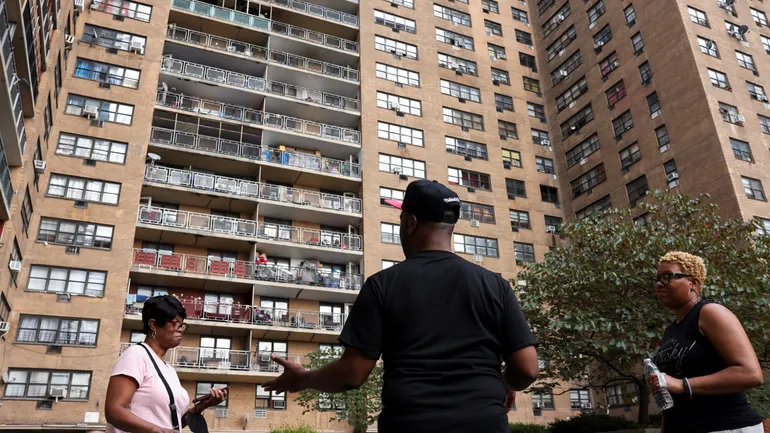
Recently, the city of Dallas, USA, has been receiving frequent inquiries from peers across the country and even from London, UK, asking about a regulation in effect since 2017 that requires landlords to provide functioning air conditioning. Rosana Savcic, manager of the city's code compliance department, revealed that this policy is becoming a reference model for other cities dealing with extreme heat.
As climate change drives global temperature records to be broken repeatedly, more cities are considering establishing tenants' 'right to cool,' which means legally ensuring that rental housing can be cooled to a specific maximum indoor temperature. This temperature limit varies by region, but tenants still bear the cost of energy bills.
V. Kelly Turner, associate director of the Luskin Innovation Center at UCLA and a heat policy researcher, points out that currently, cities requiring landlords to provide air conditioning systems are still a minority, not the norm. But this situation is changing.
In 2020, Montgomery County, Maryland, passed the first law of its kind in the region, requiring most landlords to provide air conditioning capable of cooling indoor temperatures below 80 degrees Fahrenheit (about 26.7 degrees Celsius), applicable from June to September each year. In 2022, Chicago passed a law requiring some large residential buildings or senior housing to provide air conditioning in common areas when the outdoor heat index exceeds 80 degrees Fahrenheit. New Orleans implemented new rules this year requiring that bedrooms in rental properties be equipped with air conditioning capable of cooling to below 80 degrees Fahrenheit.
"We are recognizing that we must develop specific policies for heat."

Ashley Ward
Director of the Heat Policy Innovation Hub at Duke University
In New York, the largest city in the US, its sustainability plan has explicitly stated that it will develop a maximum indoor temperature policy for summer by 2030. In July of this year, a city council member introduced legislation requiring landlords to provide air conditioning during the summer. Los Angeles County officials are also in the early stages of developing similar policies.
The necessity of cooling legislation
Experts say this trend of requiring cooling equipment reflects a growing recognition that climate change necessitates new protections and policies.
"We are recognizing that we must develop specific policies for heat," says Ashley Ward, director of the Heat Policy Innovation Hub at Duke University. In addition to cooling standards for rental housing, heat-specific policies should also include worker protections and universal cooling for schools and prisons.
Ward points out that a major challenge in advancing rental cooling standards is the public perception that air conditioning is a luxury rather than a necessity. This mindset 'has led us to accept that prisons can be without air conditioning. 40% of schools in the US have inadequate HVAC systems.' But as heat records continue to be broken and heat-related deaths rise, policymakers' attitudes are shifting.
Limitations of the right-to-cool policies
Although rental cooling standards are an important step in addressing the impact of urban heat on residents, Ward believes these policies are not a perfect solution.
Even if low-income tenants have air conditioning, they may not turn it on due to concerns about high electricity bills. Therefore, some experts call on states and cities to pair rental cooling standards with electricity bill assistance programs that account for cooling needs. States typically allocate most of the federal Low Income Home Energy Assistance Program (LIHEAP) funds to heating rather than cooling. According to a June report by the National Energy Assistance Directors Association and the Energy Poverty and Climate Center, despite growing demand, LIHEAP available funds have shrunk from $6.1 billion in fiscal year 2023 to $4.1 billion in fiscal year 2024.
Turner said in an email that cities should begin monitoring low-income households' ability to pay for cooling costs, and this data could provide a basis for strengthening cooling support through subsidy programs like LIHEAP.
Gregory Pierce, co-executive director of research at the UCLA Luskin Center and associate professor of urban planning, explains that utility companies can also help reduce cooling costs. State utility commissions can play a significant role in promoting or encouraging utility-operated energy affordability programs, but cities can also participate, for example, by partnering with utilities to make basic energy usage more affordable for residents.
Take tiered electricity pricing as an example: high-usage users pay higher rates, while low-usage users pay lower rates. But Pierce notes that hotter weather may mean these tiers need adjustment so that the cheapest tier covers the electricity needed for typical household cooling. 'I don't think many utilities have adjusted these tiers based on air conditioning demand, let alone electrification.'
Turner adds that any equity-oriented program must listen to the specific difficulties of community members. 'There may be solutions we don't even know about because we need to hear from those facing tough choices,' such as deciding between running the AC and buying food.
Rental cooling standards also face other challenges. Landlords with tight budgets may struggle with complex and costly retrofits. Waste heat from air conditioning units can exacerbate the urban heat island effect, and adding cooling equipment may increase greenhouse gas emissions—although heat pumps allow building owners to provide cooling while replacing fossil fuel-driven HVAC equipment.
How should the temperature limit be set?
Another key question is what maximum temperature cities should set for rental housing. Dallas's regulation requires air conditioning to cool indoor temperatures at least 15 degrees Fahrenheit below the outdoor temperature, with a maximum threshold of 85 degrees Fahrenheit (about 29.4 degrees Celsius). This means that even if it reaches 105 degrees Fahrenheit outside, rental housing must be able to maintain 85 degrees Fahrenheit or lower.
Ward believes cities should set the maximum temperature lower. She cites 73 degrees Fahrenheit as a threshold for good sleep and recovery and suggests cities set the maximum around 76 degrees Fahrenheit, as fans can help lower it a few more degrees.
"Can we pass legislation that at least gives people the opportunity to have a safe thermal environment?"
V. Kelly Turner
Associate Director of the Luskin Innovation Center at UCLA
However, Turner warns that excessive debate over the precise maximum temperature could hinder pragmatic policy-making. She would rather set the maximum at 80 degrees Fahrenheit and then start discussing what is needed to implement the policy, including establishing a complaint reporting process and finding funding.
"At some point, the question isn't 'Can we achieve a precise temperature?' but 'Can we pass legislation that at least gives people the opportunity to have a safe thermal environment?'" she says. "Once we do that, we can start fine-tuning."