
Deep Dive
来自我们记者的行业洞察

Will apartment executive hiring pick up in 2026? Recruiters weigh in.
Despite slowing industry growth, apartment management companies are still investing in strengthening their management teams. American Landmark CEO Joe Lubeck plans to expand technology and capital markets executives in 2026 after raising approximately $400 million. Multiple headhunting agencies indicate that after several years of downturn, the hiring market is expected to improve in 2026, with development and transaction-related positions having declined by 50% to 75%, but demand for AI-related roles is rising.

3 reasons multifamily development should be easier in 2026
Despite a significant decline in multifamily housing starts in 2025, industry insiders believe that with improved capital conditions, lower construction costs, and reduced supply, development difficulty is expected to ease in 2026.
What to expect from multifamily rent prices in 2026
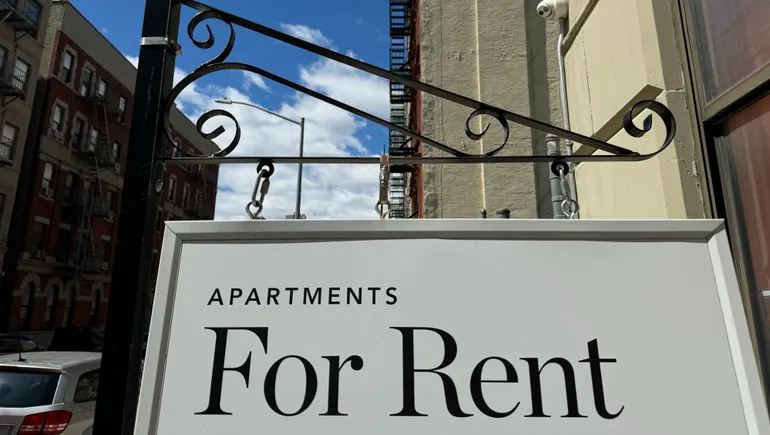
In 2025, multifamily apartment rents ended the year amid a supply peak and weak demand, with annual growth nearly flat. Entering 2026, as pandemic-era construction projects are gradually delivered, economists generally expect rents to rise moderately by about 2%. However, regional market divergence is significant: the Midwest and Northeast may lead growth, while some Sun Belt cities remain burdened by oversupply. On the macroeconomic front, declining consumer confidence, tighter immigration policies, and the structural characteristic of high-income groups dominating consumption add uncertainty to demand recovery. Rent concessions are expected to remain widespread during the spring leasing season, while regulatory changes in rent control legislation and all-in pricing may also have profound impacts on rent data and market behavior.
5 multifamily trends to watch in 2026
The multifamily housing market is expected to recover in 2026, but transaction obstacles remain. Experts point out that five major trends will dominate the market: converging price expectations between buyers and sellers, an increase in distressed assets, stable rents attracting investors, ample capital but REITs taking a wait-and-see approach.
Amid tariff, job and supply concerns, multifamily pros prioritize occupancy
The multifamily industry had anticipated that a slowdown in new supply from late 2025 into 2026 would lead to rent recovery, but economic uncertainties such as tariffs and weak employment growth have disrupted these expectations. Operators are generally adopting conservative strategies, prioritizing occupancy, with rents experiencing an unusual decline in the summer. Several executives and economists believe that the true market direction will only become clear during the spring leasing season of 2026.
3 reasons why multifamily deal volume could rise in H2
Despite a decline in transaction volume in the second quarter, industry executives expect multifamily housing transaction volume to grow in the second half of the year, driven by buyers adapting to market fluctuations, ample capital, and more properties entering the market.

How DOGE will impact Washington, DC-area apartment owners
For a long time, Washington, D.C. has been regarded as a 'safe haven' for apartment owners, thanks to stable employment in the federal government and contracting industries. However, since Trump's inauguration day, the Department of Government Efficiency (DOGE) has cut at least 101,022 federal employees, with more layoffs targeting the capital region. Although owners and REIT executives said on Q4 earnings calls that they have not yet seen major impacts, there is widespread concern over uncertainty in the short-term rental market, office lease terminations, and transaction activity. Market diversification and return-to-office policies may provide some buffer, but most believe it will take several months to observe.

Centralization Push: Assistant Manager Roles Move Remote
Over the past year, Multifamily Dive interviewed more than 20 apartment executives to explore the industry's views on centralization and its implementation. This article is the fifth in the series, focusing on the evolution of the assistant manager role—from traditional bookkeeper to a position that may be replaced by centralization—analyzing the opportunities and challenges in its transformation.

Montgomery County, Maryland's Pioneering Air Conditioning Regulation: A Regional Benchmark Reshaping Tenant Rights
Montgomery County, Maryland, passed a regionally pioneering law in 2020 requiring landlords to provide air conditioning for tenants during the summer, setting a maximum indoor temperature of 80 degrees Fahrenheit. The law originated from public testimony in 2019 by tenant Victoria Price, who described health crises in senior apartment buildings due to a lack of cooling equipment. Over four years since implementation, the county has faced challenges such as HVAC system conversions in older buildings and compliance oversight, but its experience is now being referenced by areas such as New York City and Los Angeles County.

Record High Temperatures Frequently Broken, Multiple U.S. Cities Push for Tenant 'Right to Cool' Legislation
Facing record-breaking heat due to climate change, an increasing number of U.S. cities are enacting legislation to protect tenants' right to cool, requiring landlords to provide functioning air conditioning. Dallas implemented such policies first in 2017, followed by Montgomery County, Chicago, and New Orleans, with New York City and Los Angeles County also considering similar measures. However, implementation still faces challenges such as energy bill burdens, retrofitting older buildings, and urban heat island effects.